Introduction
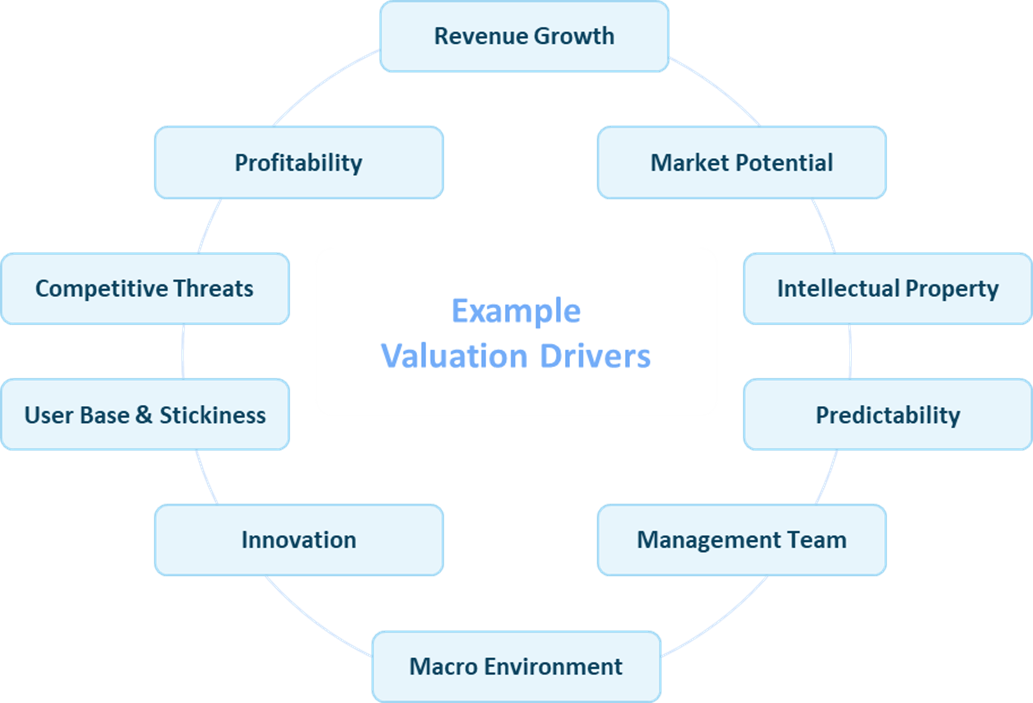
Company valuation is a key aspect of corporate finance that is used to determine the worth of a complete business or a selection of assets. The process considers various factors which could impact future performance including the management team, growth prospects, industry trends, competitive landscape and long-term defensibility among others which are summarised to an estimated range.
While principles of valuation are scientific in nature, various stages of the process require extensive assumptions of what might impact a firm's performance or the wider industry in years to come - which ultimately means that a blend of valuation methodologies is usually best practise.
There are two key types of valuation models
Absolute valuation
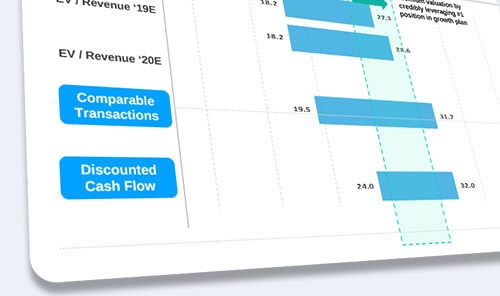
Fundamentals-based approach which focuses on an asset's future potential for income generation. All factors impacting the business, such as growth potential and industry pressures need to be reflected in company's financial forecast which is a key input for absolute valuation models. Most common ones are discounted cash flow, dividend discount and asset-based.
Relevant analogy here would be a financial approach which considers the perpetual rental income considering factors such as general inflation, neighbourhood prospects, maintenance requirements etc.
Relative valuation
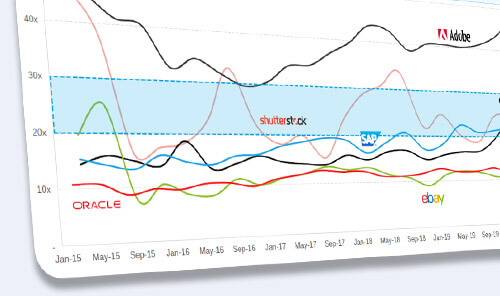
Ratio-based approach which looks at the value assigned by the market on key metrics i.e. the market value per dollar generated of revenue, EBITDA, free cash flow or even an operating metric (e.g. active users, installs, web traffic). Can either be derived by looking at data from publicly-listed companies or from precedent transactions in a similar space.
Good analogy in this example would be looking at comparable houses in the neighbourhood and applying a "price per square foot" multiple on the plot size.
Challenges in valuing a digital company
Limited information usually makes the valuation process more of an art than a science, as it often requires plenty of smart assumptions to ultimately deliver an accurate valuation estimate. Finding the right public companies to use as a benchmark, the most relevant transactions in recent years (and adjusting them for current times) or critically challenging a business plan from the perspective of a potential investor can be a challenging task.
Digital companies often add a layer of complexity to the valuation process, as their rapid growth impacts both absolute (difficulties in forecasting fundamentals) and relative (wide range of multiples) valuation techniques. As a first step, it's key that the forecast used for valuation purposes is as realistic as possible - and it usually makes sense to analyse various scenarios with sensitivity analysis.
The global reach of digital companies combined with a heavy weighting towards intangible assets make for an industry that has high and rapid growth potential, but with significant risk of disruption.
Valuation is crucial throughout the company lifecycle
Various stakeholders are likely to place close attention to valuation and on related trends from the early start-up phase all the way to up an exit transaction and beyond:
- Capital raising: ability to raise a certain amount given current traction and/or expected dilution.
- M&A: achievable valuation in majority / minority sale process or a realistic offer for acquisitions.
- Fund valuation: assessment of particular portfolio companies for internal or external review.
- Shareholder objectives: buying out passive shareholders or investors at a fair level for all parties.
- Management & employee incentivization: appropriate structure for stock-based compensation.
- Financial health: general third-party view on company performance or for leverage potential.
How might company valuations change?
As there are several factors which impact a firm's performance (see the examples presented above for just a small selection), any change that could materially impact a financial forecast will inevitably have a resulting influence on the valuation. Hence, anything which could be considered news worthy for the firm specifically or the wider industry might require another look.
It's crucial to recognise that valuations will ultimately be for that point in time only - and this is even more important for the fast-growing and ever evolving companies in the technology space.